
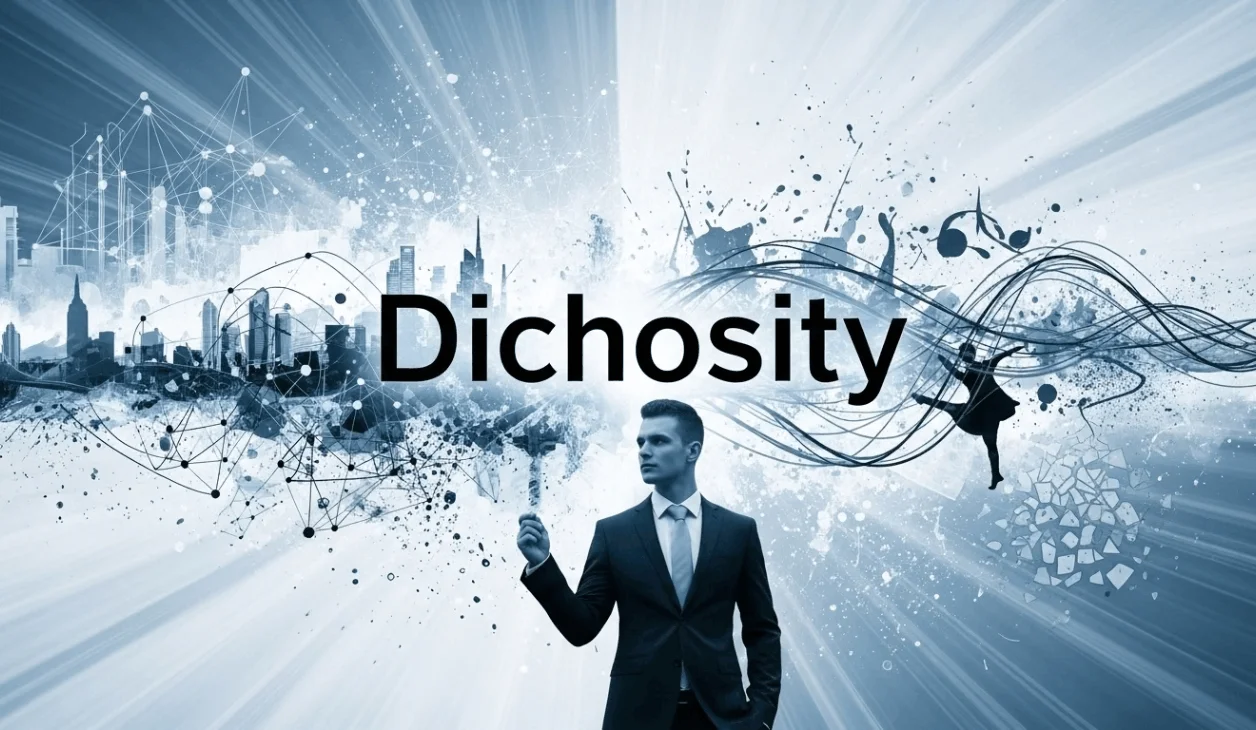
Dichosity Dynamics: Navigating Life’s Contrasting Currents
In the ever-evolving landscape of modern communication and analysis, the term dichosity has started to gain attention. Although not yet mainstream, its relevance in understanding complex dualities, contrasts, and organizational patterns cannot be underestimated. Whether in psychology, literature, technology, or social structures, the concept of dichosity offers a framework for dissecting opposing forces and understanding how they coexist.
At its core, dichosity refers to the quality or state of being divided into two distinct, often contrasting, parts. This duality is not necessarily negative; rather, it provides a lens through which one can observe balance, tension, and interplay between opposites. For example, in human behavior, dichosity may appear as the coexistence of rationality and emotion, illustrating how decisions often emerge from a blend of logic and feeling. Similarly, in literature, characters or narratives frequently exhibit dichosity to highlight conflict or thematic depth.
The Importance of Dichosity in Psychology
Psychology, as a field, thrives on understanding contradictions within human behavior, and dichosity plays a pivotal role in this analysis. By studying dichotic patterns, psychologists can identify contrasting traits that coexist within individuals. For instance, an individual might demonstrate both extroverted tendencies in social settings and introverted behaviors in solitary environments. Recognizing this dichosity allows for a more nuanced approach to therapy, personal development, and behavioral prediction.
Moreover, dichosity provides insights into cognitive dissonance—the mental discomfort experienced when holding conflicting beliefs or values. By examining the dual nature of thought processes through the lens of Duality, professionals can develop strategies that reconcile opposing mental states, ultimately leading to improved emotional resilience and decision-making.
Dichosity in Literature and Art
Beyond psychology, Duality. is a powerful tool in literature and the arts. Authors and artists often use dichotic elements to emphasize contrast and provoke thought. In classic literature, protagonists and antagonists embody Duality, illustrating the eternal struggle between good and evil, freedom and constraint, or tradition and innovation. Similarly, visual arts often leverage dichotic color schemes or thematic opposites to evoke emotional responses, drawing viewers into the complexity of the human experience.
By exploring dichosity in storytelling, audiences gain a deeper appreciation for multidimensional characters and intricate plotlines. The tension created by dichotic elements is not only compelling but also mirrors real-world complexities, allowing art and literature to reflect the dualities inherent in life.
Technological Implications of Dichosity
Interestingly, the concept of Duality extends beyond human behavior and art into the realm of technology and data analysis. In computing and information theory, dichotic systems can enhance decision-making algorithms and predictive models by acknowledging dual outcomes or conflicting signals. For example, artificial intelligence systems that process dichotic inputs—such as positive and negative feedback loops—can optimize responses and improve efficiency.
Additionally, dichosity in technology can inform user experience design. Designers may intentionally create interfaces that accommodate opposing user behaviors or preferences, ensuring a balanced and inclusive experience. By recognizing the dual nature of user interactions, companies can craft solutions that resonate with diverse audiences, highlighting the practical relevance of dichosity in innovation.
Social Structures and Dichosity
In society, dichosity is equally significant. Communities and organizations are rarely homogeneous; rather, they thrive on contrasts and diversity. Understanding dichotic dynamics in social structures enables leaders and policymakers to navigate tensions and foster cooperation. For instance, workplace teams often display dichotic tendencies, with members exhibiting complementary strengths and weaknesses. Recognizing these patterns allows for effective collaboration, conflict resolution, and strategic planning.
Furthermore, Duality sheds light on cultural and ideological divides. By analyzing opposing viewpoints through a dichotic lens, societies can promote dialogue and inclusivity. This approach emphasizes the value of understanding and integrating contrasting perspectives, rather than merely choosing one over the other.
Practical Applications of Dichosity
The practical implications of Duality are vast. From personal growth to organizational development, understanding dichotic principles can improve decision-making, creativity, and problem-solving. Individuals can leverage Duality by embracing their conflicting tendencies, ultimately achieving a more balanced and authentic self. Organizations, on the other hand, can use dichotic analysis to optimize team performance, anticipate market trends, and foster innovation.
In education, dichosity can help students appreciate complex subjects by exploring contrasting ideas and solutions. By embracing dual perspectives, learners develop critical thinking skills and a deeper understanding of intricate systems. Similarly, in business strategy, acknowledging dichotic forces—such as risk versus reward or efficiency versus quality—enables more informed and adaptable planning.
Conclusion
In conclusion, dichosity is more than just a theoretical concept; it is a practical lens through which we can view the world’s complexities. From psychology and literature to technology and social structures, dichotic principles illuminate the interplay of opposing forces that shape human experience. By embracing dichosity, individuals and organizations alike can navigate contradictions, foster creativity, and achieve a more nuanced understanding of the world around them.
As the concept continues to gain recognition, integrating dichosity into our personal and professional lives offers a pathway to balance, insight, and innovation. Whether analyzing behavior, creating art, designing technology, or shaping communities, dichosity provides the framework to comprehend and harness the dualities that define existence. Ultimately, acknowledging and exploring dichotic relationships enriches our understanding of complexity and promotes a more thoughtful approach to life.